
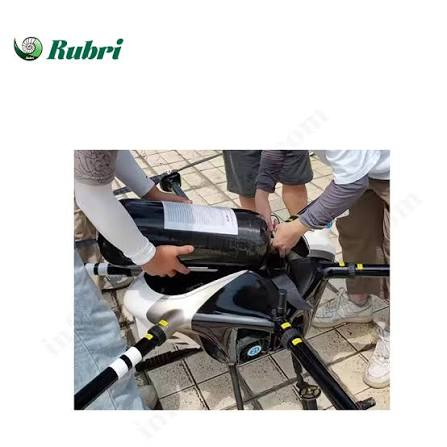
Unmanned aerial vehicles (UAVs) are becoming increasingly important in industries such as surveying, agriculture, logistics, inspection, emergency response, and environmental Hydrogen Storage System for UAV monitoring. As these applications demand longer flight times and greater operational efficiency, hydrogen fuel-cell technology has emerged as an attractive alternative to conventional battery systems. However, the effectiveness of a hydrogen-powered UAV depends heavily on the storage technology used. Selecting the right Hydrogen Storage System for UAV applications requires careful consideration of weight, capacity, safety, operating conditions, and overall system compatibility.
Why Hydrogen Storage Matters for UAVs
Energy storage is one of the most important factors influencing UAV performance. Traditional lithium-ion batteries can provide reliable power, but their energy density limits flight duration and can require frequent charging or battery replacement. Hydrogen fuel-cell systems can offer higher specific energy for longer missions, making them particularly useful for applications where extended endurance is important.
A hydrogen storage system supplies fuel to the fuel cell, where hydrogen is converted into electrical energy. The electricity then powers the UAV’s motors, avionics, sensors, and other onboard equipment. Because the storage system is directly connected to the aircraft’s energy supply, its design can affect flight time, payload capacity, stability, and safety.
Key Factors When Choosing a Hydrogen Storage System
Selecting a suitable Hydrogen Storage System for UAV applications begins with understanding the aircraft’s specific requirements. Different UAV platforms have different payloads, operating ranges, flight profiles, and environmental conditions.
Weight and Energy Density
Weight is a critical consideration for every UAV. A storage system that is too heavy can reduce payload capacity, flight time, and maneuverability. Hydrogen storage solutions should therefore provide an appropriate balance between hydrogen capacity and system mass.
Compressed hydrogen tanks are widely considered because they can store hydrogen at high pressure while maintaining a relatively compact form. However, the tank, valves, regulators, fittings, and protective components all contribute to the total system weight. Engineers should evaluate the complete storage package rather than considering the hydrogen capacity alone.
Storage Capacity and Flight Endurance
The amount of hydrogen stored directly influences potential flight endurance. UAV operators should estimate hydrogen consumption based on the fuel-cell output, motor power requirements, flight pattern, payload, and expected mission duration.
A larger storage capacity may extend flight time, but it can also increase system size and weight. The ideal solution should provide enough hydrogen for the intended mission while maintaining an efficient aircraft configuration.
Operating Pressure
Hydrogen can be stored at different pressures depending on the storage technology and system design. Higher-pressure storage can increase the amount of hydrogen contained within a given volume, but it also places greater demands on tank construction, valves, regulators, and safety controls.
The storage pressure should therefore be selected according to the fuel-cell requirements and UAV architecture. Pressure regulation must deliver hydrogen consistently and within the operating range required by the fuel-cell system.
Safety Considerations for Hydrogen-Powered UAVs
Safety is essential when designing any hydrogen-powered aircraft. Hydrogen is highly flammable, so storage systems must be engineered to minimize the likelihood of leaks, damage, or uncontrolled release.
Leak Prevention and Detection
Connections, valves, regulators, and pipelines should be carefully selected and installed to reduce leakage risks. A reliable hydrogen storage system should incorporate appropriate inspection procedures and, where necessary, detection technology capable of identifying abnormal hydrogen concentrations.
Regular maintenance is also important. Components should be checked for wear, damage, and potential leakage before operation, particularly when UAVs are used in demanding environments.
Tank Protection
UAVs may experience vibration, impacts, temperature changes, and mechanical stress during operation. Hydrogen tanks should therefore be protected from unnecessary physical damage. Proper mounting can help prevent excessive movement and reduce stress on connections.
The storage system should also be positioned in a way that supports the UAV’s center of gravity and protects critical components during normal flight operations.
Environmental Conditions
UAVs may operate in hot, cold, humid, dusty, or high-altitude environments. These conditions can influence hydrogen storage performance and the operation of related components.
Temperature can affect pressure inside a storage tank, while vibration and repeated mechanical loading can influence component durability. For this reason, the Hydrogen Storage System for UAV applications should be evaluated under the environmental conditions expected during actual missions.
Engineers should also consider how the system performs during transportation, storage, takeoff, flight, landing, and post-flight handling.
Choosing Between Storage Technologies
Several hydrogen storage approaches may be considered for UAV applications. Compressed gas storage is one of the most established options because it is comparatively straightforward and can be integrated with fuel-cell systems.
Other technologies, including advanced hydrogen carriers and solid-state storage concepts, may offer different advantages in terms of safety, storage density, or operating requirements. However, each technology involves different trade-offs involving weight, complexity, temperature requirements, hydrogen release characteristics, and system maturity.
The best choice depends on the UAV’s mission rather than simply selecting the technology with the highest theoretical storage capacity.
System Integration and Fuel-Cell Compatibility
A storage system should never be selected independently of the rest of the UAV powertrain. The tank, pressure regulator, valves, fuel-cell stack, cooling system, electronics, and control system must work together.
The hydrogen delivery rate should match the fuel cell’s requirements during different stages of flight. Sudden changes in power demand may require the storage and regulation system to respond consistently. Poor integration can reduce efficiency or create unnecessary operational risks.
System designers should also consider how easily the storage unit can be inspected, replaced, refilled, or serviced between missions.
Cost and Maintenance
Initial purchase price is only one part of the overall cost. Operators should also consider maintenance, refueling infrastructure, component lifespan, inspection requirements, and replacement costs.
A storage solution that costs more initially may provide better durability and reliability over its operational lifetime. For commercial UAV fleets, maintenance efficiency can become especially important because aircraft may operate frequently and require quick turnaround between missions.
Future Trends in UAV Hydrogen Storage
Hydrogen storage technology continues to develop as researchers and manufacturers seek lighter, safer, and more efficient solutions. Improvements in composite materials, tank design, sensors, pressure management, and system integration could make hydrogen-powered UAVs increasingly practical.
Future systems may also feature smarter monitoring capabilities that track pressure, temperature, hydrogen levels, and system condition in real time. Such technologies could help operators identify potential problems before they affect flight performance.
Conclusion
Choosing the right Hydrogen Storage System for UAV applications requires a balanced evaluation of energy capacity, weight, pressure, safety, environmental performance, compatibility, maintenance, and cost. A storage system that looks efficient on paper may not be the best choice if it adds excessive weight or does not integrate properly with the fuel cell and aircraft structure.
By evaluating the complete power system and matching the storage technology to the UAV’s mission requirements, designers can achieve a practical balance between endurance, performance, reliability, and safety. As hydrogen technology continues to advance, carefully engineered storage systems will play an important role in supporting the next generation of long-endurance UAVs.