
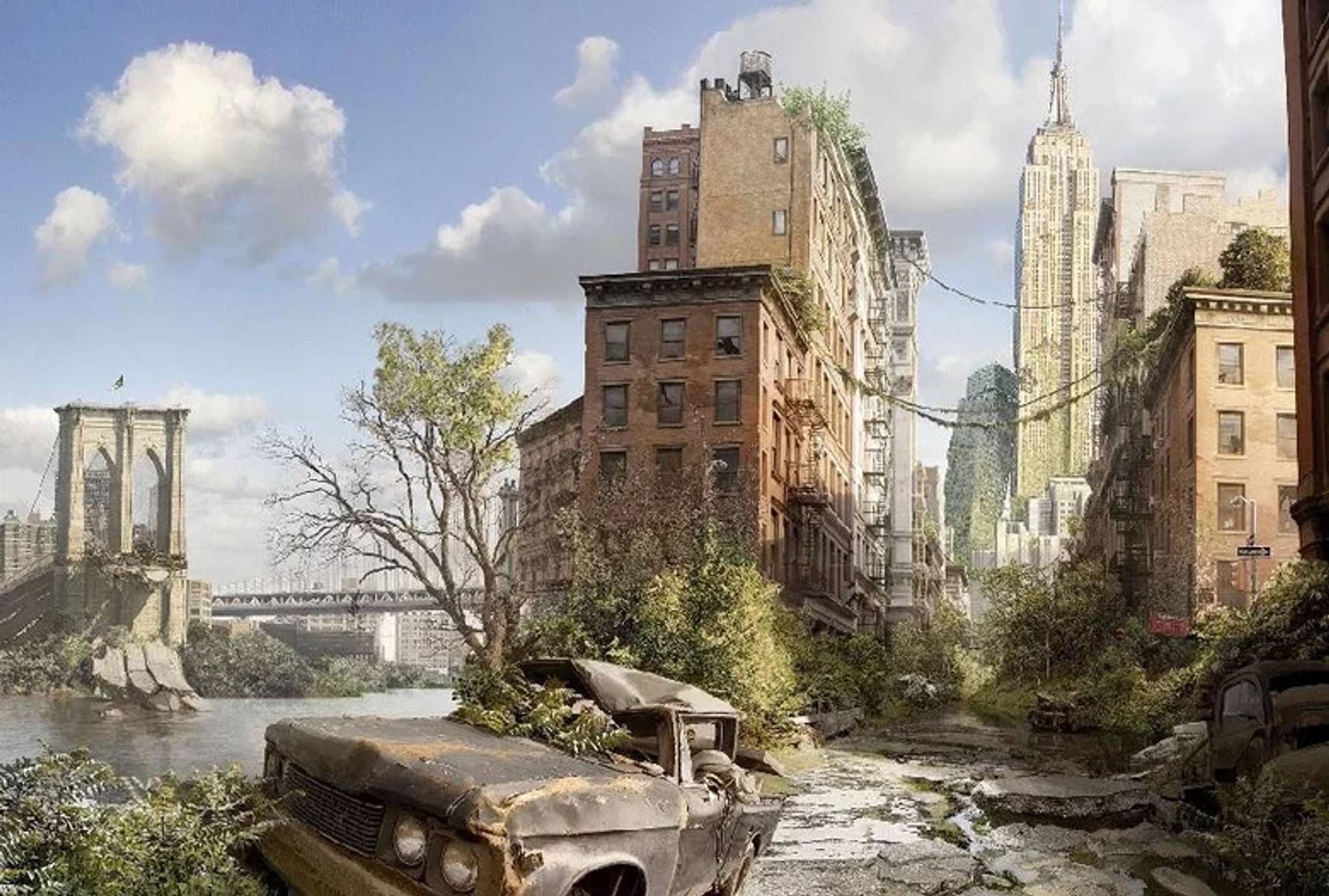
When civilization collapses, survival becomes more than finding food, shelter, and clean water. The deeper challenge is rebuilding the values, relationships, and institutions that once made society possible. A post apocalyptic science fiction world provides a powerful setting for exploring this struggle because it combines the devastation of a broken civilization with questions about technology, human progress, and the future.
After a catastrophic event, survivors may inherit the remains of cities, abandoned machines, damaged infrastructure, and fragments of forgotten knowledge. Yet rebuilding humanity requires more than restoring buildings. People must decide what kind of society they want to create and whether the mistakes of the old world should be repeated.
The World After Civilization Falls
A post-apocalyptic world can emerge from many disasters. Nuclear conflict, environmental collapse, artificial intelligence failures, pandemics, asteroid impacts, or technological wars can permanently transform Earth. Whatever the cause, the result is often a landscape where familiar systems no longer function.
Cities may stand empty beneath overgrown vegetation. Roads can become dangerous routes controlled by rival groups. Electricity may be available only in isolated settlements. Advanced technology might still exist, but only a small number of people understand how to operate or repair it.
This creates an interesting contradiction. Humanity may possess remnants of incredible technological achievement while struggling with basic necessities. A damaged communication satellite could still orbit the planet while survivors search for drinkable water below.
The destruction of infrastructure also creates a psychological transformation. People who once depended on governments, corporations, hospitals, schools, and digital networks must learn to depend on one another.
Survival Is Only the Beginning
In the early stages of collapse, survival naturally becomes the priority. Communities search for food, secure shelter, medicine, and protection. However, once basic needs become manageable, a larger question appears: what does it mean to be human when the old civilization is gone?
A settlement cannot survive indefinitely through fear and violence. People need trust, cooperation, rules, education, and shared goals. Rebuilding these systems becomes one of the most important challenges in a post apocalyptic science fiction story.
Leaders may establish councils to distribute resources fairly. Engineers may restore water systems. Teachers may create small schools where children learn mathematics, history, agriculture, and science. Farmers may develop sustainable methods for producing food.
These ordinary activities become revolutionary because they represent a rejection of permanent chaos.
Preserving Knowledge for the Future
One of humanity’s greatest resources after an apocalypse is knowledge. Unfortunately, knowledge can disappear surprisingly quickly when institutions collapse.
Libraries may burn, servers may lose power, and specialists may die without passing their skills to others. A society that loses its scientific and historical knowledge could eventually forget how its ancestors built modern civilization.
Survivors therefore need to become guardians of information.
A community might establish archives containing books, technical manuals, medical records, agricultural guides, and historical documents. Older survivors could teach younger generations skills that are no longer available through formal institutions.
Technology could also play an important role. Artificial intelligence systems, offline databases, renewable energy systems, and robotic equipment might help preserve information. But technology itself must be understood rather than blindly trusted.
The goal should not simply be to recover the old world. It should be to learn from it.
Building Communities Based on Trust
The strongest societies in a post-apocalyptic setting are rarely those with the most weapons. They are often those capable of cooperation.
Trust becomes a form of survival technology. When people believe that their neighbors will contribute food, protect children, share medical supplies, and respect community rules, resources can be used more efficiently.
Creating trust is difficult when survivors have experienced violence and betrayal. Communities may therefore establish systems for conflict resolution. Councils, mediators, local courts, or democratic assemblies can help prevent disagreements from becoming destructive wars.
Small communities may also develop traditions that strengthen social bonds. Shared meals, festivals, storytelling, ceremonies, and collective projects remind people that survival is not only an individual responsibility.
These traditions help transform groups of survivors into societies.
Learning From the Mistakes of the Past
Rebuilding humanity does not mean rebuilding everything exactly as it was.
The previous civilization may have collapsed partly because of greed, environmental destruction, political conflict, uncontrolled technology, or inequality. Recreating the same systems without addressing their weaknesses would simply prepare the world for another disaster.
This is where the post apocalyptic science fiction genre becomes particularly meaningful. It allows writers to ask whether humanity can genuinely learn from its failures.
Perhaps the new civilization chooses renewable energy instead of dependence on limited resources. Maybe communities place strict controls on dangerous technologies. Perhaps political systems are designed around cooperation rather than domination.
The survivors have an opportunity to create a different future, but they must first acknowledge why the old one failed.
Technology and the New Human Society
Advanced technology can be both a solution and a threat.
Solar power systems could provide clean electricity. Agricultural drones might increase food production. Medical machines could treat injuries that would otherwise be fatal. Artificial intelligence could help communities analyze environmental conditions and manage resources.
However, technology can also recreate dangerous power structures. Whoever controls energy systems, communication networks, weapons, or artificial intelligence could gain enormous influence over others.
For this reason, rebuilding humanity requires ethical decisions about technology. Survivors must determine not only what machines can do but also what they should be allowed to do.
Technology should serve people rather than replace their responsibility for society.
Children as the Foundation of a New Civilization
Perhaps the most important characters in a post-apocalyptic world are children born after the collapse.
They did not experience the old civilization directly. Their understanding of the world comes from stories told by parents, teachers, and surviving records.
Education therefore becomes extremely important. Children must learn practical survival skills, but they should also learn art, philosophy, science, communication, and history.
Without education, the new generation may inherit fear and prejudice. With education, it can inherit wisdom without inheriting every mistake.
Children also represent hope. Their existence demonstrates that humanity has moved beyond simply surviving the disaster. They provide a reason to build something lasting.
Creating a Future Worth Living In
Ultimately, rebuilding humanity is about more than restoring civilization. It is about deciding what civilization should become.
A rebuilt society needs clean water and reliable food, but it also needs music, friendship, creativity, compassion, curiosity, and freedom. These qualities may appear less important than physical survival, yet they are what give survival meaning.
A settlement that has electricity but no trust is fragile. A community with weapons but no justice is dangerous. A society with technology but no ethics can repeat the disasters of the past.
The most successful rebuilding efforts combine practical knowledge with human values.
The Hope at the End of the Ruins
A post apocalyptic science fiction world may begin with destruction, but it does not have to end with despair. The ruins of civilization can become the foundation for something better.
Survivors can restore agriculture, rebuild schools, preserve knowledge, develop responsible technologies, and create communities based on cooperation. They can remember the failures of previous generations while refusing to let those failures define the future.
Humanity’s greatest strength has never been its ability to avoid disaster. It has been the ability to adapt, learn, cooperate, and begin again.
In the aftermath of civilization’s collapse, rebuilding humanity becomes the ultimate act of hope. The new world may never look like the old one, and perhaps that is exactly the point. From broken cities and forgotten machines, survivors can create a society that values life, knowledge, responsibility, and connection. The apocalypse may destroy the world they knew, but it does not have to destroy their ability to imagine a better one.